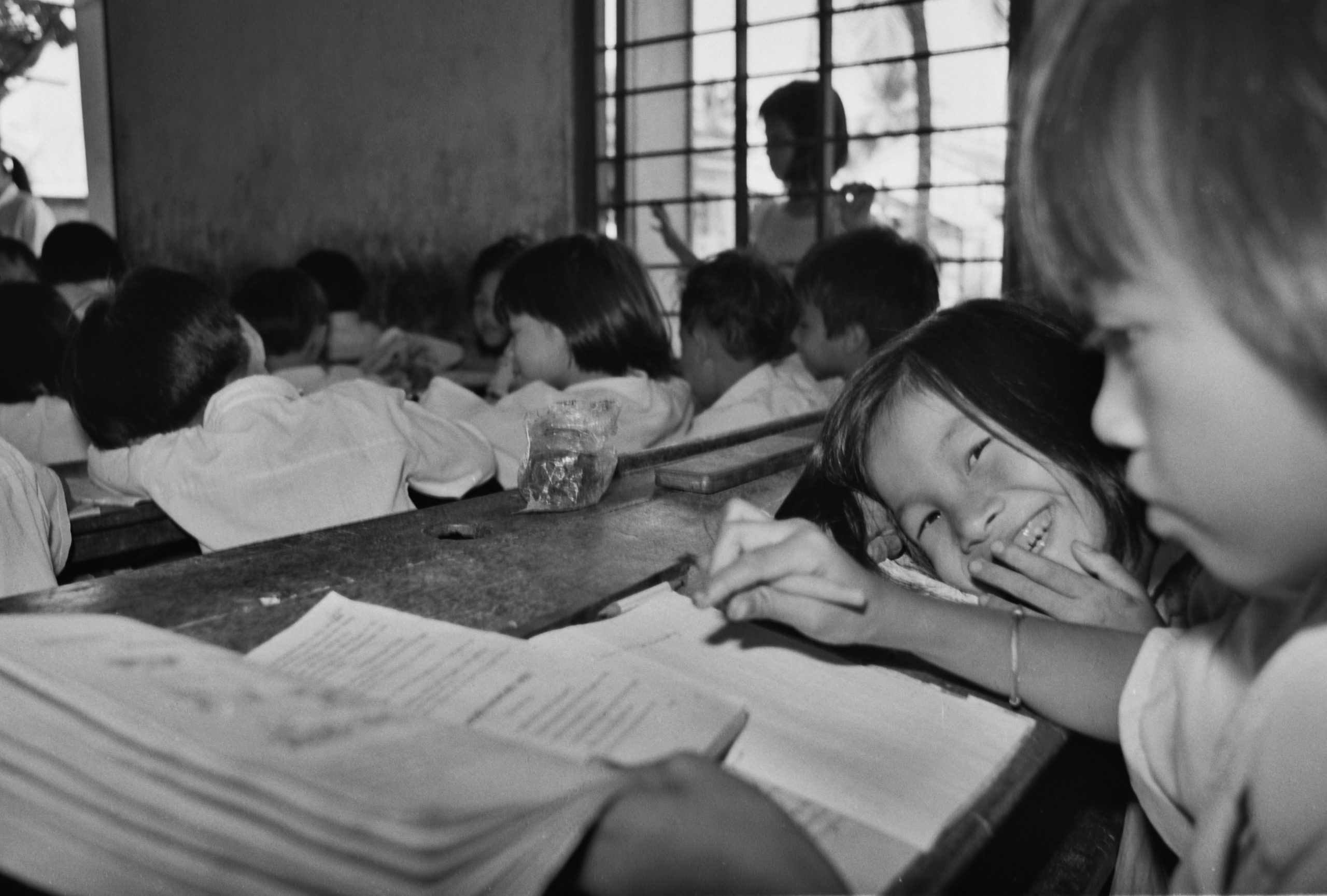
In einer vietnamesischen Grundschule in Nha Trang.
Bildung genießt in der vietnamesischen Gesellschaft einen extrem hohen, historisch konfuzianisch geprägten Stellenwert, was zu einem ausgeprägten Leistungsdruck führt.
Nach der wirtschaftlichen Öffnung des Landes (Dổi Mới, ab 1986) stand Vietnam vor der gewaltigen Aufgabe, ein marodes, vom Krieg gezeichnetes Schulsystem komplett zu reformieren. Im Jahr 1992 wurde das Schulsystem landesweit einheitlich auf 12 Schuljahre (5-4-3-Modell) umgestellt. Vorher waren die Schulsysteme in Nord- und Südvietnam unterschiedlich.
Ich habe auf meinen Reisen durch Länder Südostasiens immer wieder Schulen besucht und war dort stets willkommen.
Nha Trang, Vietnam, 1995
At a Vietnamese primary school in Nha Trang.
Education holds an extremely high place in Vietnamese society—historically shaped by Confucianism—though this also leads to intense pressure to perform.
Following the country’s economic opening (Đổi Mới, starting in 1986), Vietnam faced the monumental task of completely reforming a dilapidated school system scarred by war. In 1992, the system was standardized nationwide to the 12-year structure (the 5-4-3 model); prior to this, the school systems in North and South Vietnam had differed.
Nha Trang, Vietnam, 1995
Schule in Nha Trang
Views: 18