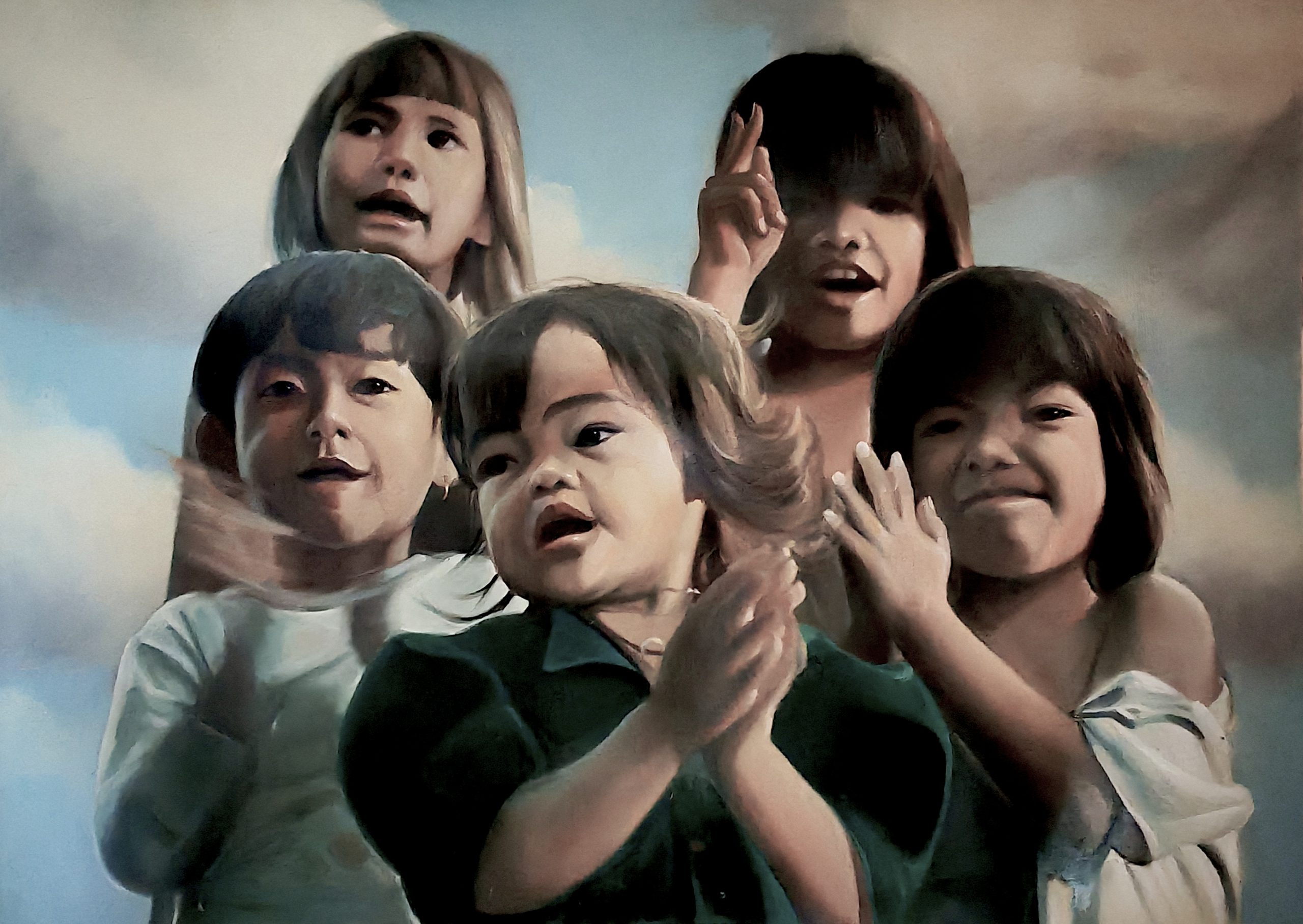
Kinder am Strand von Kampong Som (bekannt auch als Sihanoukville). Der Strand gehörte zum einem achtstöckigen Hotel, das zu dieser Zeit eine Ruine war. Das Hauptgebäude war bewacht, aber in der Umgebung hatten sich arme Menschen angesiedelt.
Vor 1975 war Sihanoukville ein Badeort, in dem auch die Königsfamilie ein Ferienhaus besaß. In den 90ern war Sihanoukville ein ruhiger Fischer-Ort mit wenig Touristen (viele Backpacker). Das Ferienhaus der Königsfamilie konnte man ohne Probleme besuchen. Seine Ausmaße waren vergleichsweise bescheiden.
Ab 2016 verwandelten Milliardeninvestitionen von chinesischen Unternehmen den einstmals beschaulichen Ort in ein Zentrum für Casinos und Hochhäuser. Die Rechnung ging nicht auf: Das Verbot von Online-Glücksspiel und die Corona-Pandemie führte dazu, dass chinesische Investoren sich zurückzogen. Sie ließen angefangene Hotels, Apartments und Casinos als Rohbauten zurück, wodurch die Stadt zu einer Stadt mit hunderten Bauruinen wurde. Nach dem Zusammenbruch des Casinobooms im Jahr 2019 und der Pandemie standen in der Provinz zeitweise mehr als 500 unfertige Hochhaus-Skelette.
Das Bild wurde von dem kambodschanischen Maler Narin nach einem nach Fotos von J. Peters gemalt. Die Fotos hängen neben dem Gemälde. Da die Kids zwar posierten, aber nie gleichzeitig in die Kamera blickten, montierte Jürgen Peters mehrere Fotos mit Schere und Kleber, und übergab das Ergebnis an Narin, damit er es malen konnte.
Kampong Som/Sihanoukville, Kambodscha, 1997
Children on the beach at Kampong Som (also known as Sihanoukville). The beach belonged to an eight-story hotel that was a ruin at the time. The main building was guarded, but impoverished people had settled in the surrounding area.
Before the rule of the Khmer Rouge, Sihanoukville was a seaside resort where the royal family also owned a holiday home. In the 1990s, Sihanoukville was a quiet fishing town with few tourists (mostly backpackers). The royal family’s holiday home could be visited without difficulty; its dimensions were comparatively modest.
Starting in 2016, billions in investment from Chinese companies transformed the once-quiet town into a hub of casinos and high-rises. The plan failed to pay off: bans on online gambling and the coronavirus pandemic caused Chinese investors to withdraw. They left behind unfinished hotels, apartments, and casinos—mere structural shells—turning the town into a place filled with hundreds of abandoned construction projects. Following the collapse of the casino boom in 2019 and the onset of the pandemic, there were at times more than 500 unfinished high-rise skeletons standing in the province.
The painting was created by the Cambodian artist Narin, based on photographs taken by J. Peters. The photographs are displayed next to the painting. Since the children posed but never looked at the camera at the same time, Jürgen Peters used scissors and glue to assemble several photos and handed the result to Narin to paint from.
Kampong Som/Sihanoukville, Cambodia, 1997